The numbers behind Pakistan’s migration story are staggering in the best and worst ways. Remittances hit $38.3 billion in 2024–25 — a record. Entire villages in Punjab and Khyber Pakhtunkhwa run on money wired home from Riyadh, Dubai, and beyond. Migration is not a fringe phenomenon here. It is a national economic strategy, quietly humming beneath the surface of every policy document and every family dinner table.
But behind every statistic is a person who paid too much, signed a contract they couldn’t read, or crossed a border they shouldn’t have had to.
That tension — between migration as opportunity and migration as risk — sat at the heart of the Essentials of Migration Management 2.0 (EMM 2.0) CSO Training, held in Lahore from April 21 to 23, 2026. Organised by IOM Pakistan with support from Immigration, Refugees and Citizenship Canada, the three-day training brought together civil society organisations from across the country. The Civil Society Alliance on Migration (C-SAM), of which OxDev serves as secretariat, was among the participating organisations — and left with something more than a certificate.

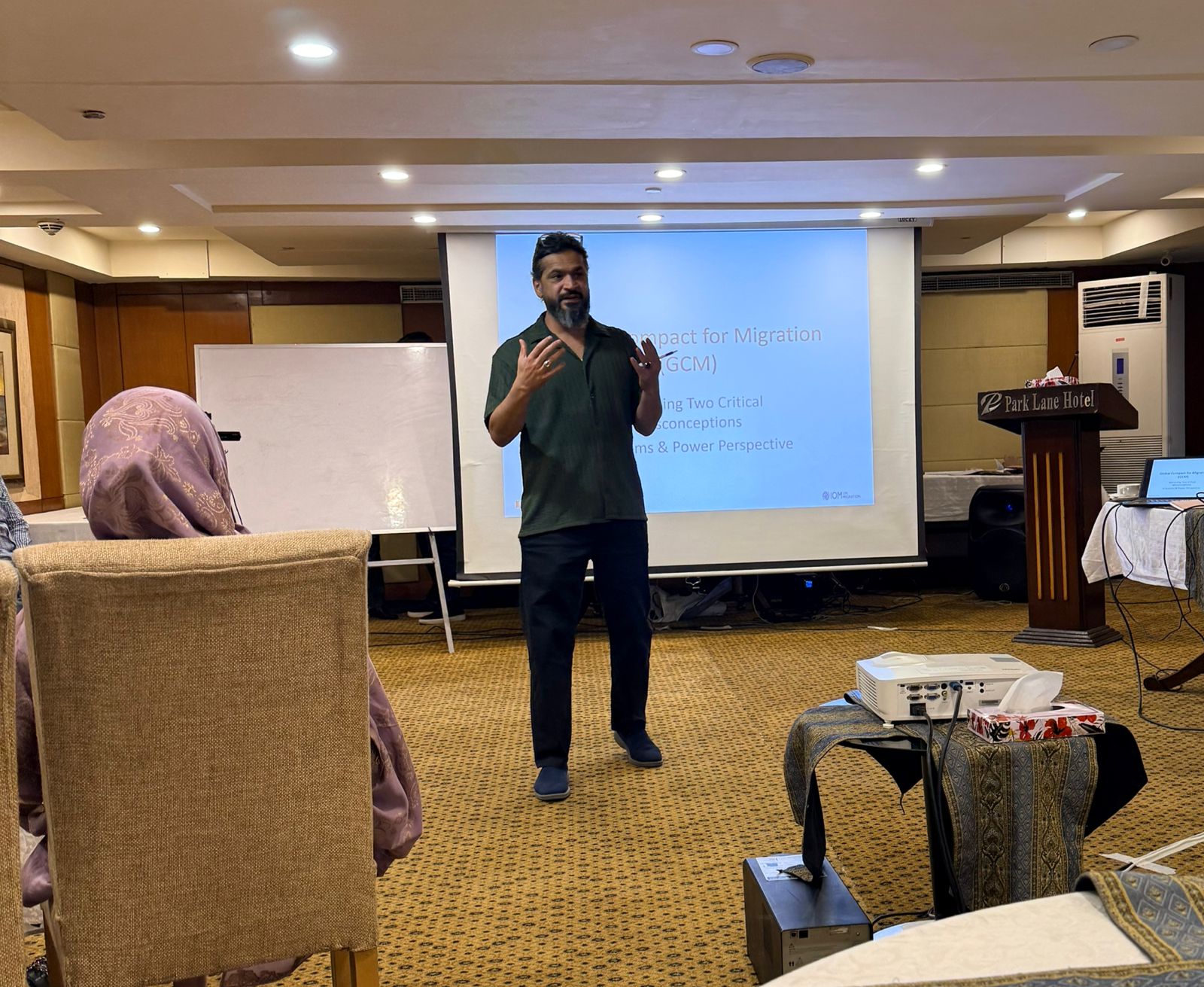
A session on the Global Compact for Migration and common misconceptions about its scope and obligations. Park Lane Hotel, Lahore.
The Gap Between a Framework and a Family
The Global Compact for Migration, adopted in 2018 by 164 countries including Pakistan, promises a lot. Safe migration. Orderly migration. Regular migration. Twenty-three objectives. Eight interconnected systems. It is, on paper, one of the most comprehensive governance frameworks for human mobility ever negotiated.
On the ground, it often looks very different.
Sub-agents routinely charge illegal recruitment fees. Domestic workers — most of them women — depart without formal documentation, which means when a contract changes abroad, they have no legal recourse. Pakistan’s border with Iran stretches 905 kilometres, but the Federal Investigation Agency (FIA) manages only two formal crossing points along it. When irregular routes are the only routes available, people don’t stop moving. They just move more dangerously.
“Deterrence shifts smuggling routes. It does not reduce flows. What reduces flows — and reduces harm — is expanding safe, accessible, regular pathways.”

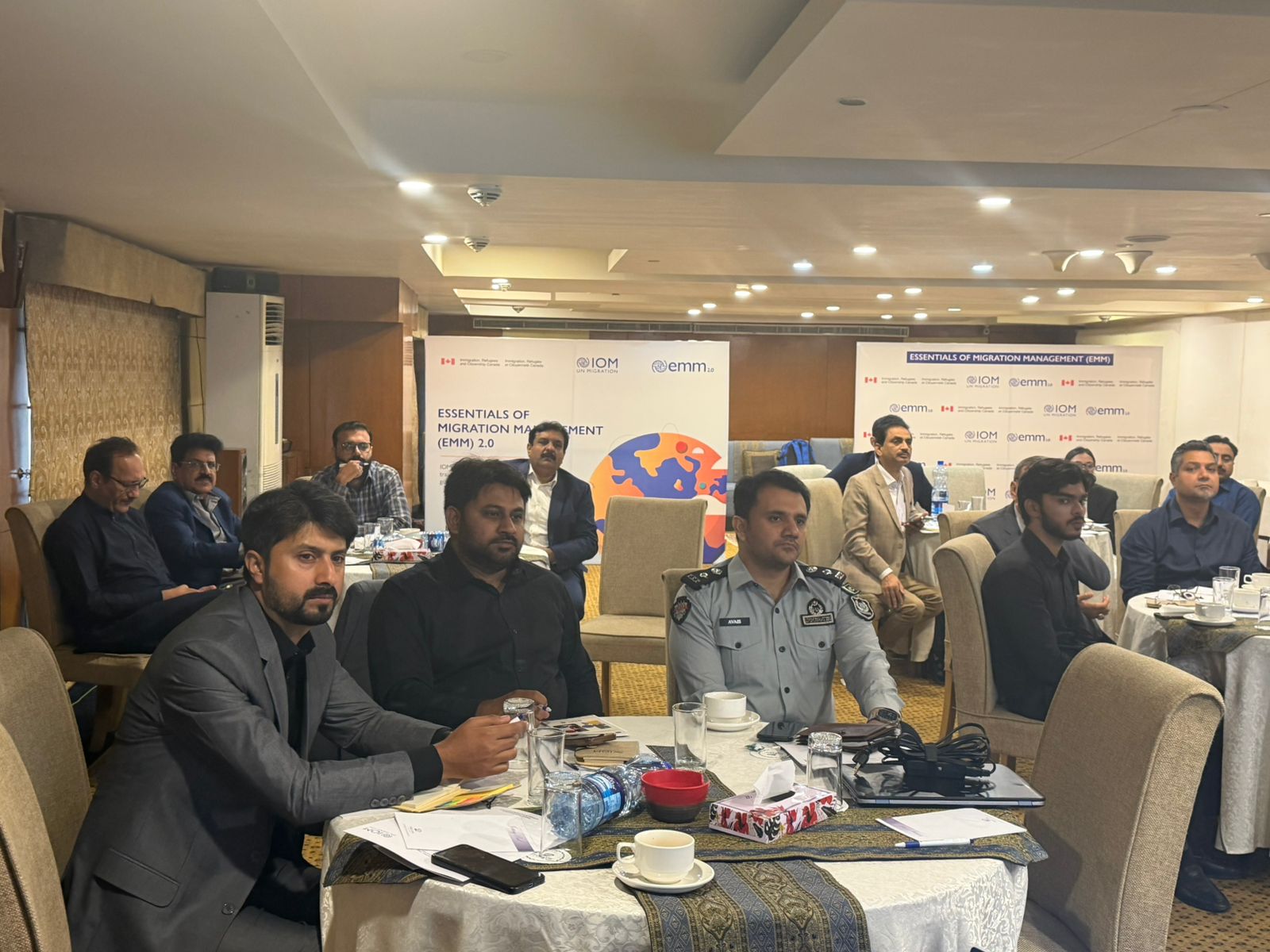
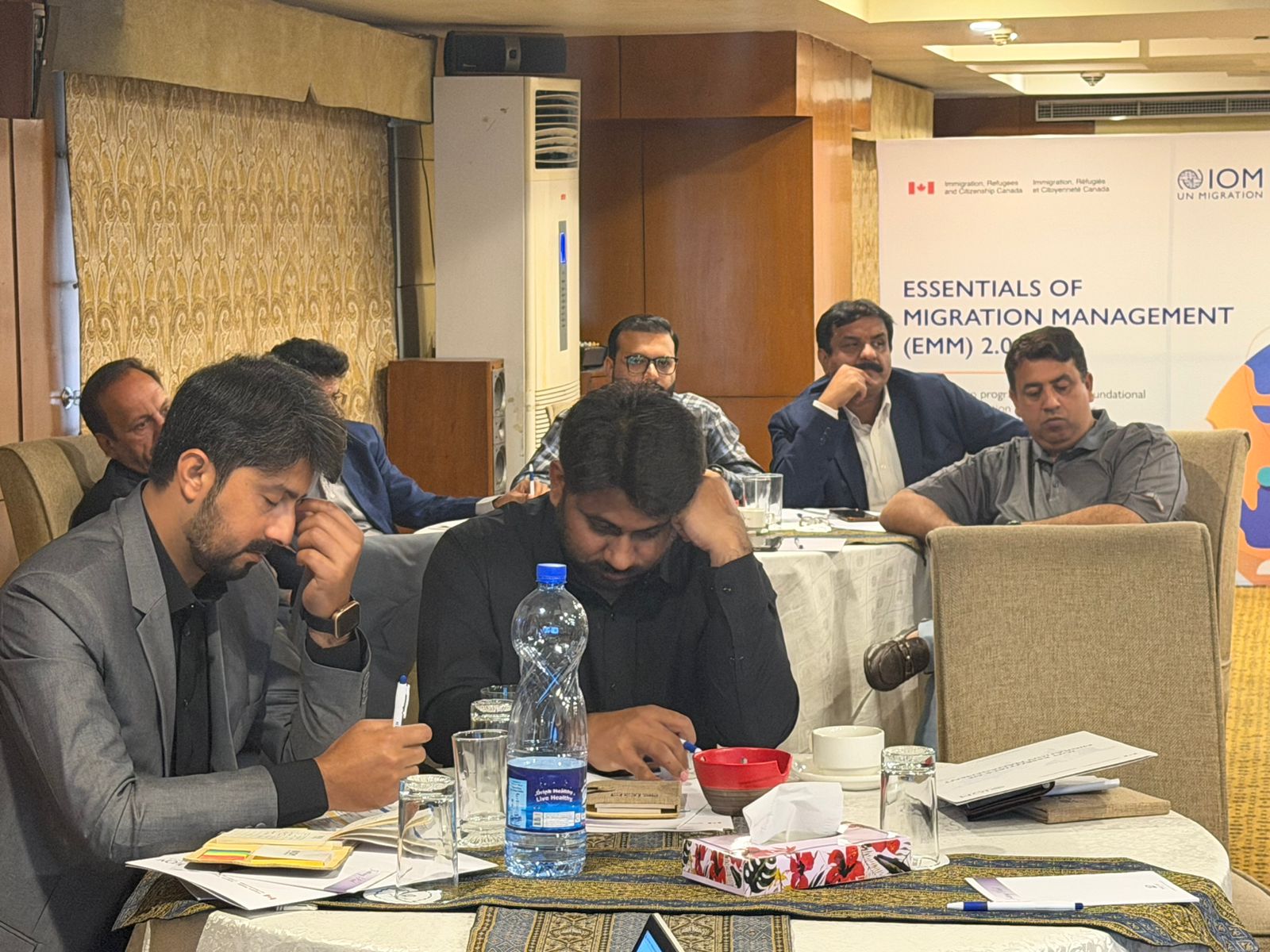
Participants from government, law enforcement, and civil society organisations engaged in structured discussion throughout the three days.
Without an Identity, You Don’t Exist
One of the training’s sharpest insights was deceptively simple: legal identity is not a bureaucratic nicety. It is the foundation of everything.
A returning migrant with no documentation cannot access reintegration services. They cannot prove their skills to an employer. In the worst cases, they face indefinite detention or statelessness. Pakistan returned over 11,000 deportees in 2025 alone. Most arrived without a structured pathway waiting for them — no reintegration desk, no counsellor, no link to NAVTTC skills programmes.
The Overseas Pakistanis Foundation’s Reintegration Framework exists in policy. It does not yet exist in practice at the district level. That is the gap that civil society lives in every day.
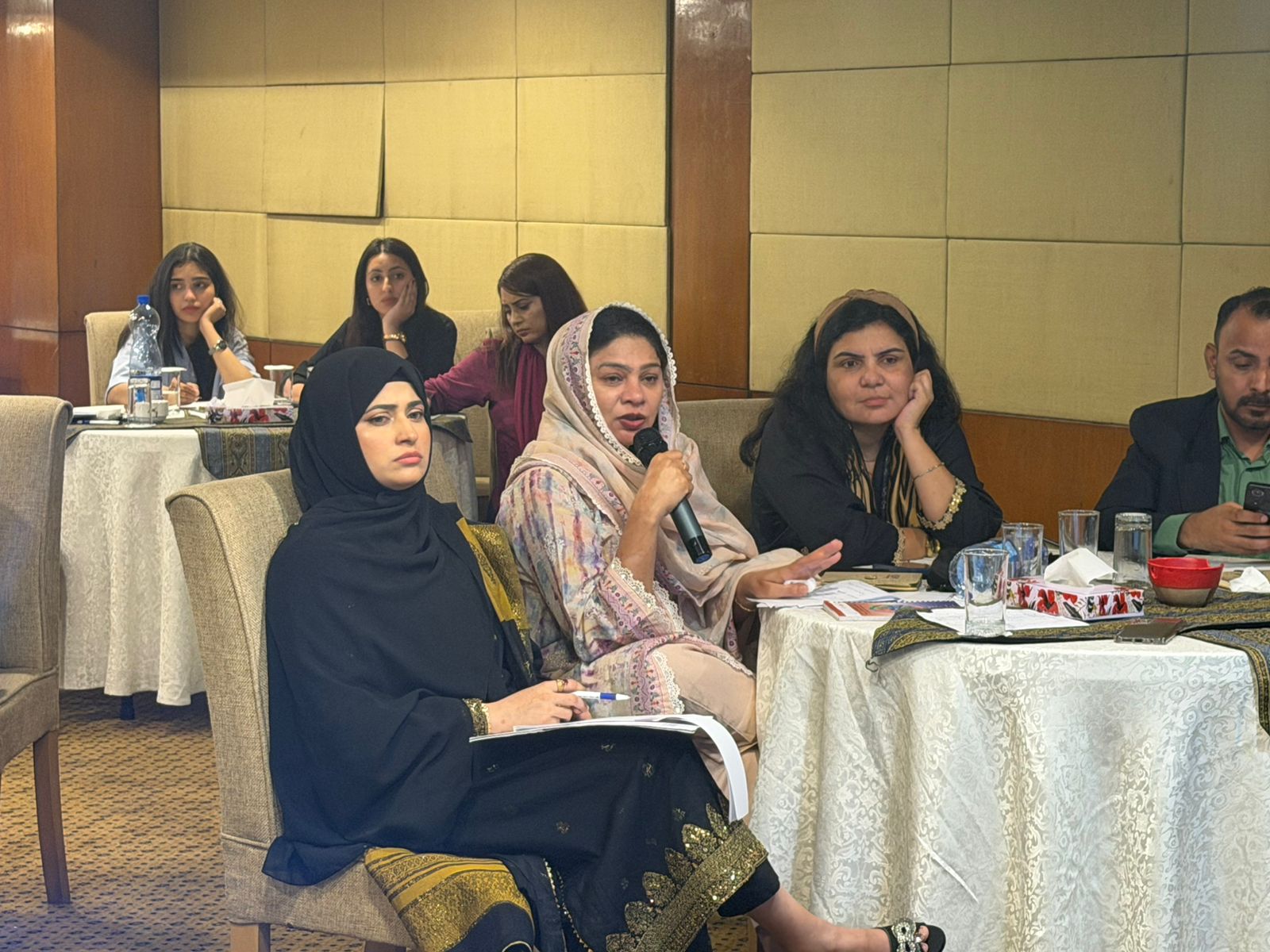
Civil society practitioners — many working directly with migrant women and returnees — brought field realities into the room.
Why Law Enforcement Alone Will Always Fall Short
Here is what no government agency will say loudly enough: combating trafficking in persons and smuggling of migrants cannot be a law enforcement problem alone.
The FIA’s Anti-Human Trafficking Circles made over 2,300 arrests in 2024. The Prevention of Trafficking in Persons Act was amended in 2025. These are real achievements. But traffickers recruit through trusted community networks. They speak the same language. They know which families are desperate.
Civil society does too — and that is its fundamental advantage.
CSOs are often the first, and only, trusted point of contact for a vulnerable migrant before departure, during transit, and after return. A pre-departure counselling session in a village in Multan can do what no airport checkpoint can: reach someone before they hand their savings to a fraudulent agent. A community worker who knows a returning woman’s name can connect her to psychosocial support that a government portal never will.
“The 4Ps framework — Prevent, Protect, Prosecute, and strengthen Partnerships — only functions when the fourth P is taken seriously. Partnerships are not a courtesy. They are the architecture.”
What a Pledge Actually Looks Like
On the final morning of the Lahore training, participants were handed back something they had written on Day 1 — a pledge. A commitment to one specific action they would take when they returned to their communities.
Not a strategy. Not a framework. A decision.
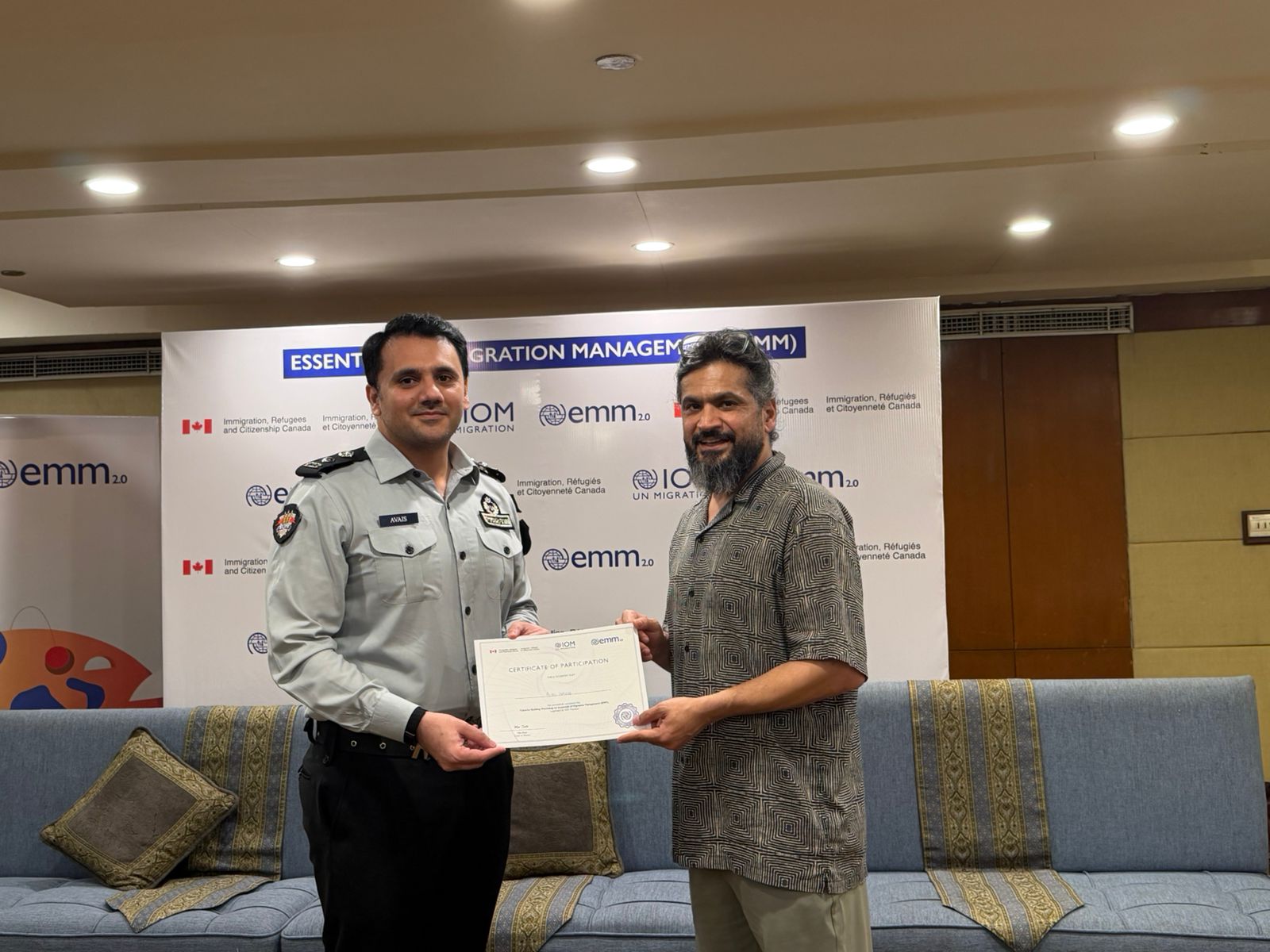
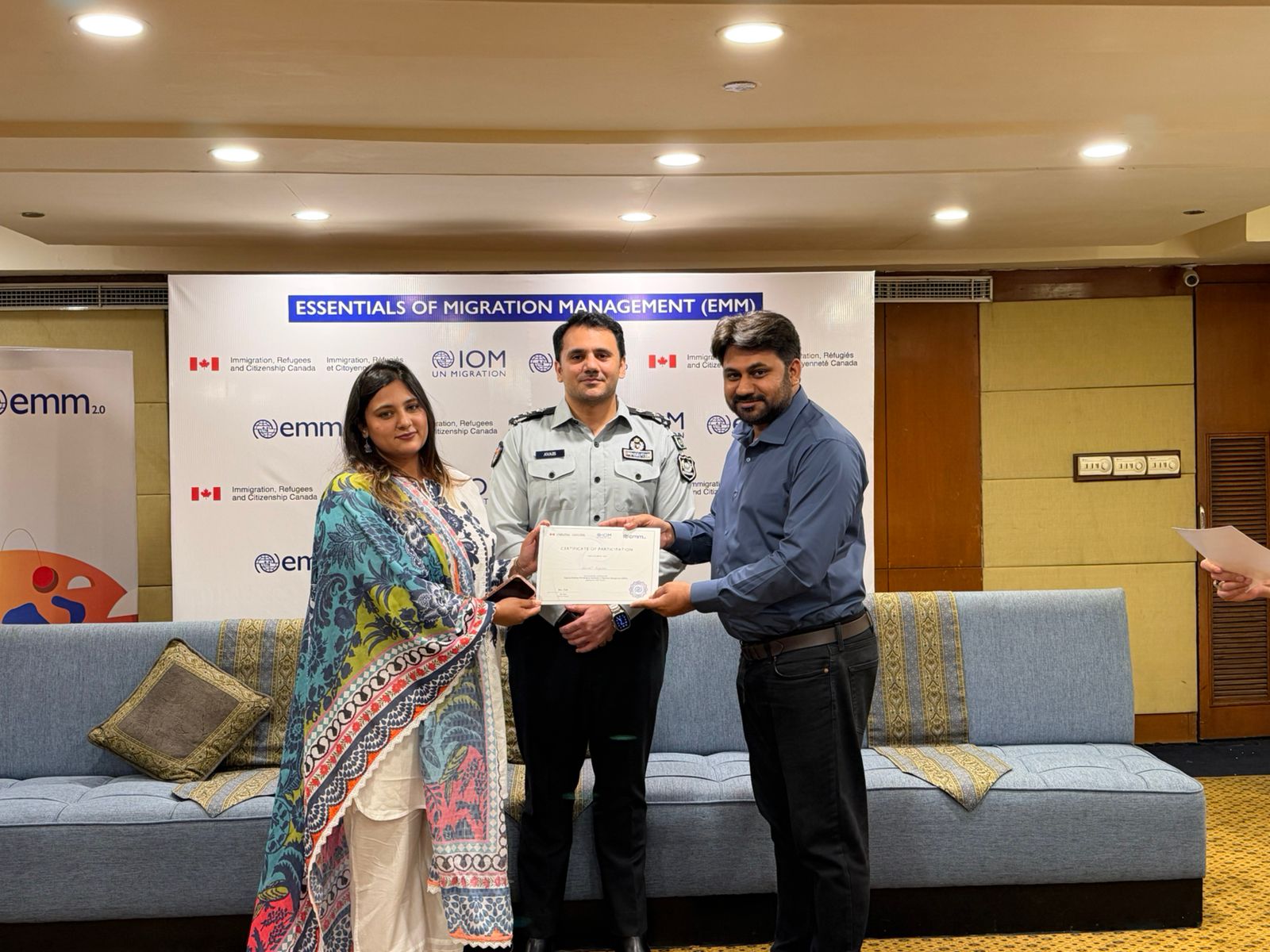
Certificates of participation presented at the closing ceremony, recognising the commitment of practitioners to putting the training into action.
Pakistan’s migration story will be written by its numbers: the remittances, the deportees, the departures, the returnees. But its protection story will be written by whether the civil society ecosystem is strong enough, coordinated enough, and resourced enough to hold the line between a framework and a family.
C-SAM’s role as a convening alliance is precisely this: to ensure that when Pakistan makes a pledge to 164 countries about safe and orderly migration, someone in Lahore, and Multan, and Peshawar, and Quetta, is watching, documenting, and holding it to account.
That is not a soft power role. That is the whole point.
OxDev serves as the secretariat for the Civil Society Alliance on Migration (C-SAM) in Pakistan. The EMM 2.0 training was organised by IOM Pakistan with support from Immigration, Refugees and Citizenship Canada (IRCC).